
The Mistake Almost Everyone Makes First
The door reverses halfway down, or it won't fully close, or it groans right before it finally latches. So someone grabs a screwdriver, pops open the little panel on the opener, and turns the force dial up a notch. The door closes. Problem solved, right?
This is tempting because it works immediately and it feels like a tiny, harmless adjustment. No new parts, no cost, no phone call. But force and travel limits aren't independent dials you tune to taste — they're safety settings that only work correctly when the rest of the door system (springs, rollers, track, cables) is also working correctly. Turning up the force doesn't fix whatever is making the door hard to close. It just makes the opener push harder against the problem, which is a different thing entirely.
What Travel Limits Actually Control
Travel limits tell the opener exactly where "fully open" and "fully closed" are. The opener uses these points to know when to stop the motor. If the limits are off, you'll see one of two problems:
- Door stops short — it looks closed but there's a gap at the bottom, or it stops a foot from the floor and just sits there.
- Door over-travels — it keeps straining after it should have stopped, which stresses the opener motor and the top section of the door.
Travel limits should be set once, correctly, based on the door's actual physical range of motion. They're not something you adjust every season to compensate for a door that's suddenly harder to move.
What Force Settings Actually Control
Force is how hard the motor pushes or pulls before it decides something is blocking the door and reverses. This is the setting behind the federally required auto-reverse safety feature — if a kid's bike, a pet, or a foot is under the door, the opener is supposed to sense the resistance and stop or reverse before real damage or injury happens.
When you raise the force setting to push through a door that's sticking, binding, or heavy, you're not fixing the resistance — you're telling the opener to ignore it. That has two consequences:
- The safety reversal gets weaker. A door set to muscle through resistance is less likely to stop for an actual obstruction. That's not a theoretical risk; it's the exact thing the auto-reverse feature exists to prevent.
- Everything upstream takes the hit. The motor, the gears, the drive belt or chain, the springs, and the track all absorb extra stress every single cycle. Openers rated for a certain number of cycles wear out faster. Springs that are already slightly weak get pushed harder, which accelerates fatigue and can lead to a sudden spring failure.
Why the Door Got Hard to Move in the First Place
This is the part that actually needs solving, and it's usually one of a handful of things:
- Spring tension has drifted. Springs lose a bit of lift capacity over years of cycling. A door that used to feel balanced now feels heavy, and the opener has to work harder to move it.
- Track is out of alignment. Rollers binding against a track that's shifted even slightly will create resistance that feels like "the door needs more force" but is really a mechanical alignment issue.
- Seasonal swelling or temperature swings. Wood-composite doors can swell slightly during the wetter winter months and shrink back as things dry out, changing how smoothly the door tracks through its full range. Temperature swings between warm days and cool nights — common here through fall and into winter — cause metal tracks and hardware to expand and contract slightly, which can shift alignment over time.
- Dust and dry-season grit. During the dry months, dust and wildfire smoke residue settle into rollers, hinges, and tracks. That buildup adds friction the opener has to fight through, and it can also coat photo-eye safety sensors enough to cause erratic reversing that has nothing to do with force settings at all.
- Salt air corrosion. For homes closer to the coast, salt air accelerates rust on springs, hinges, and track hardware, adding resistance and shortening component life.
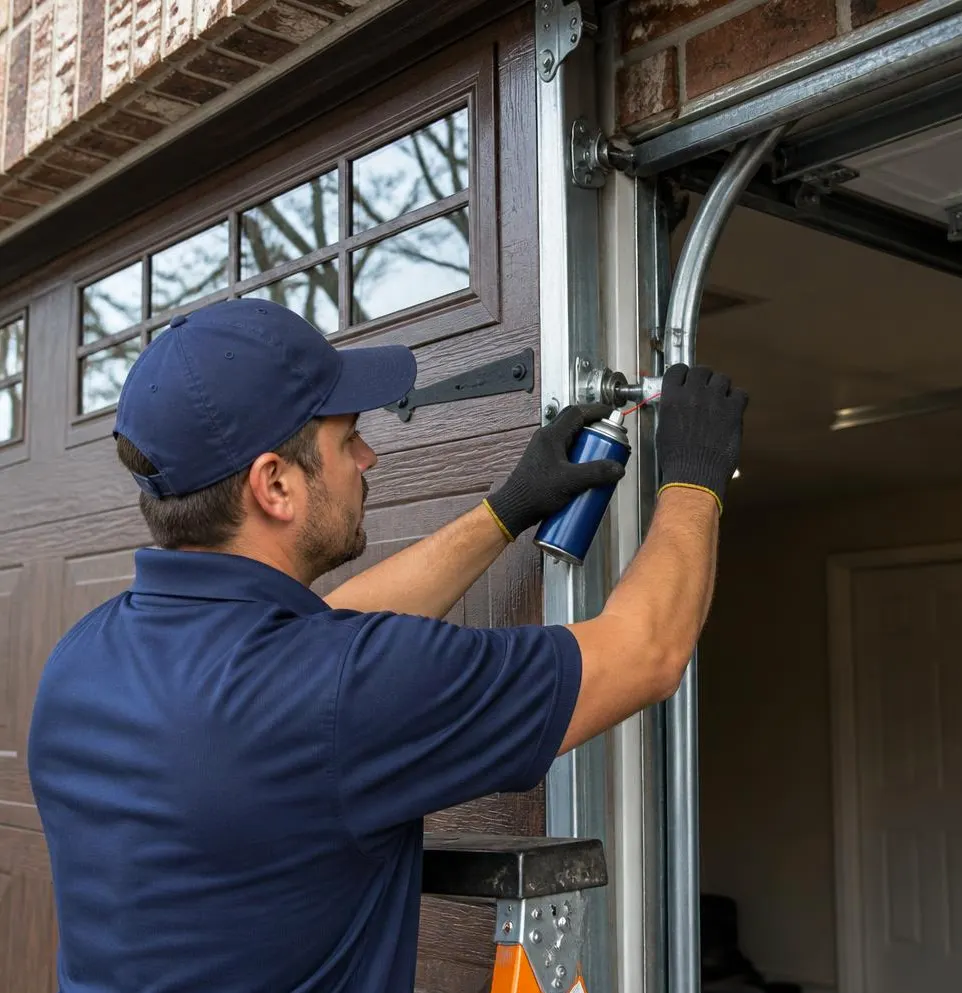
None of these get fixed by a force adjustment. They get fixed by addressing the actual cause — rebalancing the springs, realigning the track, lubricating and cleaning the hardware, or cleaning the sensor lenses.
A Safer Way to Test the Door
Before touching any opener settings, do the manual balance test: disconnect the opener (pull the release cord) and move the door by hand. A properly balanced door should move smoothly and stay put when lifted halfway. If it's heavy, drops on its own, or binds somewhere along the track, that's your real problem, and it's a mechanical one, not a settings one.
Also check the auto-reverse function itself: place a piece of wood or a roll of paper towels flat on the ground where the door closes. The door should reverse immediately on contact. If it doesn't reverse, or it crushes the object before stopping, the force is set dangerously high and needs to come down, not go up further.
When to Call Mountain View Garage Door
If the door feels heavy, the opener strains on every cycle, or you've already adjusted the force dial and it's still not behaving, it's time to get the actual cause diagnosed instead of compensating for it. Our Garage Door Opener Repair & Installation service includes properly setting force and travel limits only after confirming the door itself is balanced and moving freely — adjusting the opener without checking the door first just masks the symptom. If the resistance is coming from aging springs, worn rollers, or track wear from years of seasonal temperature swings and dust, our Garage Door Maintenance visit catches and corrects that before it turns into a bigger repair or a snapped spring.
If you're in Mountain View, Sunnyvale, Palo Alto, Los Altos, Cupertino, Santa Clara, Menlo Park, or Campbell and your garage door opener is straining, reversing oddly, or just feels off, give Mountain View Garage Door a call. We'll find out what's actually making the door hard to move and fix that, not just turn up a dial and hope it holds.